Before you commit to building a timber frame home, you need to understand what you’re actually looking at financially. Not ballpark guesses or vague ranges, but real numbers you can plan around.
At Hamill Creek, we’ve been building custom timber frame homes for over 35 years. We’ve learned that clients do best when they understand the timber frame home cost from the start. Yes, it’s a significant investment. In return you’re getting quality construction, energy efficiency, and a home that will outlast you and your kids. We’ll walk you through kit pricing, complete turnkey costs, what factors drive your numbers, and how to make the most of your budget.
What Timber Frame Kits Actually Cost
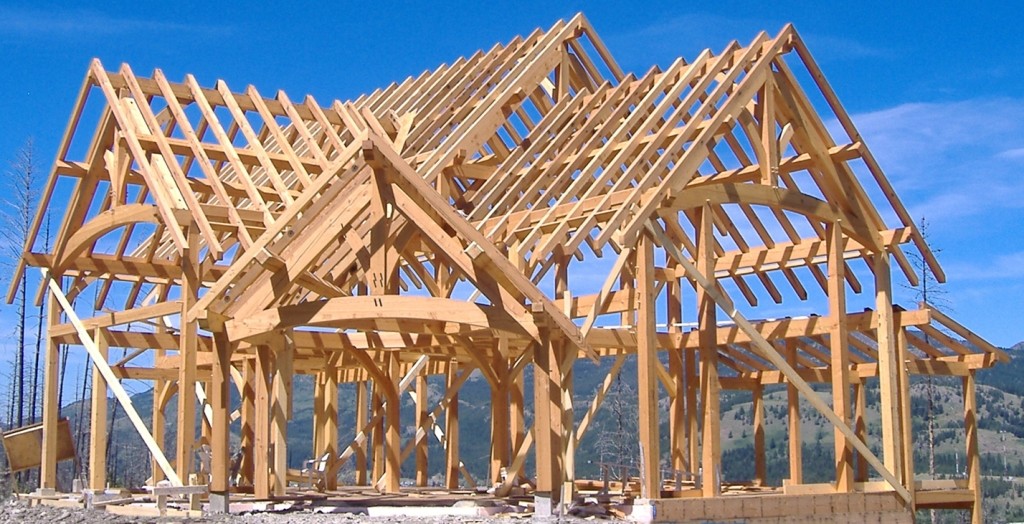
A Hamill Creek timber frame kit typically runs $60 to $90 per square foot for the timber frame structure itself. That includes all the timber pieces with mortise and tenon joinery already cut, stained, and test-fit, as well as the oak pegs and any required hardware.
Additionally, we offer timber frame design, structural engineering, and permit drawings. You also get delivery to your site, tongue and groove ceiling materials, and either a built-up roof system or SIP walls and roof, depending on your design.
What you’re getting is the structural core of your home. Those dramatic exposed timbers and the framework that make a timber frame home feel the way it does.
What’s not included in the timber frame kit? Foundation, exterior walls, roofing, interior finishes, mechanical systems, and site work. The frame raising itself is quoted separately since crane and crew costs vary based on your structure’s size and how accessible your site is.
What Does a Finished Timber Frame Home Cost?
When we talk about turnkey timber frame home cost, we mean everything. You walk into a finished home, keys in hand. For that, you’re typically looking at $400 to $500 per square foot.
That range covers your timber frame kit, foundation, and site prep, wall systems like structural insulated panels (SIPs) or conventional framing, roofing, windows and doors, all your interior finishes, including flooring, cabinets, and countertops, mechanical systems like HVAC, plumbing, and electrical, plus all the labor and contractor costs to pull it together.
Why such a wide range? Location matters a lot. A project in California or Hawaii is going to cost more than one in the Midwest. Material choices make a difference too, along with how custom you want to go. During design development, we provide detailed cost breakdowns so you can see exactly where your money is going and make informed decisions about where to adjust.
What Drives Your Timber Frame Cost
Every timber frame home is custom, so your final number depends on the choices you make and the circumstances you’re working with. Some of these you control. Others you work around.
Size and Design Complexity
Square footage is the most obvious timber frame cost driver. Bigger home, more materials, more labor. But timber framing adds another layer. Cathedral ceilings and vaulted spaces give you dramatic volume without adding square footage, but they do require more timber and more complex engineering.
Design complexity matters too. Our standard floor plans cost significantly less than fully custom designs. That doesn’t mean standard plans are boring. We’ve refined them through hundreds of projects, and they offer real character. But if you want custom decorative joinery, curved timbers, or unique structural features, expect to add engineering time and master artisan hours.
Material Selection
This is where you have real control over your timber frame home cost.
We primarily work with Douglas fir and western red cedar. Cedar runs about 30% more, but it offers better rot resistance. That matters a lot in humid climates like Hawaii. For drier regions, Douglas fir performs great and costs less.
Wall systems are a big decision. Structural insulated panels give you R-40+ insulation and dramatically lower energy bills. Conventional framing has a lower upfront material cost, but higher installation costs and increased long-term utility expenses.
The same goes for roofing and interiors. Asphalt shingles are economical. Metal lasts longer. Cedar shake looks traditional but costs more. Cabinets, countertops, flooring—these decisions add up. The smart approach is to invest in the spaces you’ll use most and find value elsewhere.
Site and Location
Your site can significantly impact your timber frame cost, and most of this is outside your control. Remote locations mean higher transportation costs. Steep slopes, heavy tree cover, or poor soil add foundation complexity. If you need a well and septic system, you could be looking at $40,000 or more before construction even starts.
Regional economies vary too. Building in higher-cost states and regions, such as the Northeast, California, or Hawaii, typically runs 20-30% above national averages. Southern and central states and regions generally offer better value per square foot.
Building Codes and Regulations
Local codes can also affect your timber frame home cost. Earthquake zones, heavy snow regions, and hurricane-prone areas all require additional engineering. Permit fees range from a few hundred dollars to several thousand, depending on where you live.
The good news is that Hamill Creek’s engineered drawings meet or exceed applicable building codes nationwide. We’ve built everywhere from British Columbia to Hawaii, so we know how to navigate local requirements without surprises.
The Stuff People Forget to Budget for When Building
Even with careful planning, some costs catch people off guard.
Site work tends to be bigger than expected. Well and septic systems usually run $15,000 to $40,000. Then there’s utility hookups, driveway construction, grading, and drainage work. If your property needs significant clearing or excavation, that adds more.
Professional fees stack up too:
- Architectural services beyond what we include
- Permits and inspections
- Surveys and soil testing
- Construction insurance
These are all necessary, and they all need to be in your budget.
We recommend setting aside 10-15% for contingency. Buried utility lines, unexpected soil conditions, material price changes, and weather delays. Construction throws curveballs. It just does.
Mid-project additions are another thing to watch for. Once you see your home taking shape, that outdoor living space starts looking a lot more appealing. Same with upgraded HVAC, solar panels, or smart home features. These can enhance your home, but they can also strain your budget if you haven’t planned for them.
We provide itemized quotes during design development so you can see everything laid out and plan accordingly. No one wants budget surprises halfway through a build.
How Timber Frame Homes Compare to Conventional
Let’s put a timber frame home cost in perspective. Any custom home these days is a significant investment. Here’s how the numbers break down:
| Build Type | Average Cost Per Square Foot |
| Starter Home | $200 – $300 |
| Timber Frame Homes | $400 – $600 |
| High-end Custom Homes | $400 – $600 |
So yes, timber frames run about 10-15% more than a conventional custom build with similar finishes. But here’s what’s worth understanding: the timber frame itself represents maybe 5-10% of your total timber frame home cost, yet it delivers about 99% of what makes the home feel special. That’s not sales talk. That’s what our clients tell us.
The premium comes from specialized craftsmanship. Mortise-and-tenon joinery requires master timber framers with years of experience. Every connection is engineered and hand-fitted. The materials are premium too: heavy timbers, high-performance SIPs, and quality hardware. Not standard 2x4s and fiberglass batts.
What do you get for that investment? Energy efficiency you’ll notice on every utility bill. SIPs create an airtight envelope with R-40+ insulation. Durability that lasts generations—properly maintained timber frames can stand for 100 years or more. Visual impact that conventional framing simply cannot achieve. And flexibility for future changes, since your walls aren’t structural and can be moved without affecting the frame.
Making Your Budget Work
Building a timber frame home takes real financial planning, but there are smart ways to get what you want within your budget.
- Start with honest numbers. Work with us to understand complete costs before you break ground. Realistic expectations upfront mean fewer painful decisions later.
- Figure out your non-negotiables. Maybe it’s that open great room with exposed timbers. Maybe it’s a main-level master suite. Know what matters most, and separate that from the nice-to-haves that can wait.
- Be strategic with materials. Go mid-range in guest baths and secondary bedrooms. Put your money where you’ll spend the most time.
- Consider phasing. Build your main living areas first, then add the garage or finish the basement down the road.
- Look at our existing floor plans. Modifying a proven design costs less than starting from scratch, and you still get plenty of room for personalization.
- Think smaller with room to grow. Design your frame to handle future additions. Starting at 2,000 square feet and adding on later is often more manageable than building everything at once.
- Consider a hybrid approach. Use timber framing where visual impact matters most, and conventional framing for bedrooms and baths. You get the timber frame experience without the full timber frame cost.
Why Work with Hamill Creek
We’ve been building timber frame homes for over 35 years. That’s a lot of projects, a lot of problem-solving, and a lot of lessons learned.
Our reach is global, from British Columbia to Hawaii. We’ve worked with different codes, different climates, and different site challenges. We know how to navigate whatever your project throws at us.
You’ll get detailed cost breakdowns during design development. No vague estimates. No surprise invoices. Our team includes professional designers and master artisans who know this work inside and out.
From your first consultation through raising your timber frame, we’re with you the whole way.
Ready to explore your timber frame home costs? Contact our timber frame specialists for a personalized consultation and detailed estimate.
Common Questions About Timber Frame Costs
How much does a Hamill Creek timber frame kit cost? Our timber frame kits run $60 to $90 per square foot for the structural frame. That includes design, engineered drawings, precision-cut timbers with joinery complete, delivery, ceiling materials, and roof system components. Frame raising is quoted separately since crane and crew costs vary by project.
What should I expect for a complete, finished home? Complete turnkey timber frame home cost typically ranges from $250 to $375 per square foot, depending on location, materials, and design complexity. That covers everything from site prep through final finishes.
Are timber frames more expensive than conventional homes? Yes, typically 10-15% more than a comparable conventional custom home. But the timber frame represents only 5-10% of your total cost while delivering most of what makes the home special.
How do I get an estimate for my project? Start by completing our design questionnaire. From there, we typically develop comprehensive quotes within 3-4 weeks. We’ll discuss your vision, your site, and your budget to put together a detailed estimate.
Can you help me stay within budget? Absolutely. We work with clients through the entire design process, offering alternatives and value-engineering options at every decision point. After 35 years, we know where you can save without sacrificing quality.